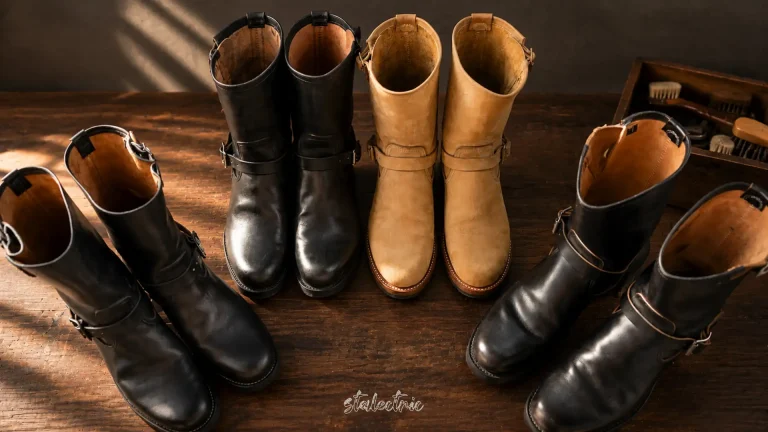
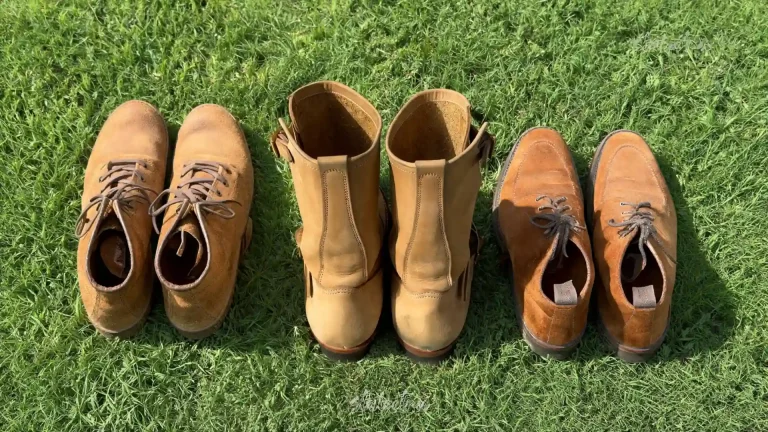
Engineer boots have a reputation for being uncomfortable, difficult to fit, and slow to break in. New owners often wonder whether they’re too hard to pull on, whether heel slip means the size is wrong, or why the leather still feels stiff after weeks of wear. Others are surprised when black leather gradually develops brown undertones, while another pair seems to stay black for years.
Most of those questions are usually answered on their own. One article explains sizing. Another focuses on break-in. A forum discussion debates heel slip, while a video explains teacore leather. The information is out there, but it’s scattered, and it doesn’t always explain how these things affect one another.
Fit influences the way a boot creases. Leather affects how quickly it softens. Construction changes how the boot settles over time. Looking at only one part of the process often leads to the wrong conclusion, especially during the first few weeks of ownership.
This guide covers those topics together. Instead of focusing on one brand or one leather, it explains the fundamentals that apply to most well-made engineer boots. Whether you’re buying your first pair or trying to understand the pair you already own, the sections below cover fit, break-in, teacore patina, and the wearing habits that shape how engineer boots look and feel over time.
Table of Contents
How Engineer Boots Should Fit
One of the biggest mistakes people make with engineer boots is judging the fit too quickly. They expect them to feel like lace-up boots, but the two are designed very differently.
A lace-up boot lets you fine-tune the fit after your foot is inside. If the instep feels loose, you tighten the laces. If the shaft feels restrictive, you loosen them. Engineer boots don’t offer that flexibility. Once your foot is in, the fit depends almost entirely on the shape of the last, the height of the instep, the heel pocket, and how the leather wraps around your foot.
That difference changes what a “good fit” feels like. A properly fitted pair of engineer boots may feel tighter across the instep than many people expect. At the same time, a small amount of heel movement during the first few wears is often completely normal. Looking at only one part of the fit usually leads to the wrong conclusion.
Why Are Engineer Boots So Hard to Put On?
Most engineer boots are designed with a relatively narrow entry. Without laces, the opening has to be small enough to help keep your foot in place while walking. That means your foot usually meets the greatest resistance as it passes through the instep and the shaft opening.
For first-time buyers, this can be surprising. A boot that takes a little effort to pull on often feels too small before it is even fully on the foot. In many cases, though, the resistance comes from the shape of the opening rather than the length or width of the boot itself.
A snug instep is usually more important than an easy entry. If the boot slides on with almost no resistance, it may also have more internal volume than you need. As the leather begins to soften, that extra space often becomes more noticeable rather than less.
This doesn’t mean every difficult pull-on is a good sign. If the boot causes sharp pain, cuts off circulation, or cannot be worn comfortably after several minutes, the fit is probably too tight. The goal is a secure fit, not a painful one.
Is Heel Slip Normal?
For many engineer boots, the answer is yes.
A small amount of heel slip during the first few weeks is expected, especially with heavier leather. Before the outsole, insole, and upper begin working together, your foot and the boot have not yet settled into the same walking pattern. That slight movement usually becomes smaller as the leather flexes more naturally and the footbed starts conforming to your stride.
The amount of movement matters. A slight lift at the heel is very different from the entire foot sliding forward inside the boot. If your toes repeatedly hit the front of the boot or your heel continues moving excessively after regular wear, the fit may simply be too large.
Many people make the mistake of judging the fit while standing still. Engineer boots are better evaluated while walking. Pay attention to how the boot flexes, whether the instep keeps your foot in place, and whether the heel movement becomes more controlled over time.
Taken together, entry resistance and heel slip tell a much clearer story than either one alone. A boot that is slightly difficult to pull on but settles into a secure, stable fit after a short break-in period is often closer to the ideal than a pair that feels effortless from the first day. Understanding that difference makes the next stage, break-in, much easier to interpret.
What Actually Changes During Engineer Boot Break-In?
One of the biggest misconceptions about break-in is that it’s simply about making the leather softer. In reality, several parts of the boot begin changing at different times, and some of the earliest changes happen where you can’t even see them.
The Footbed Usually Changes First
For most people, the first part of the boot to begin adapting is the footbed. As you walk, the leather insole gradually starts conforming to the shape of your foot. This doesn’t happen overnight, but long before the outside of the boot looks noticeably different, the footbed is already beginning to settle into your stride.
The Upper Shows the First Visible Changes
The first visible changes usually appear on the upper. As the leather starts flexing in the same places every day, natural rolls begin forming across the vamp. Around the ankle, the shaft slowly starts taking on more shape instead of standing perfectly straight. None of these changes happen all at once, and different parts of the boot continue changing long after the break-in period is considered over.
Break-In Won’t Fix a Bad Fit
One thing that doesn’t change very much is the overall structure of the boot. Break-in won’t shorten the length, reshape the last, or turn a poor fit into a good one. If the boot is fundamentally the wrong size, wearing it for a few more months is unlikely to solve the problem. Break-in improves the way the boot moves with your foot, but it doesn’t completely change how the boot was built.
Different Leathers Break In Differently
With Black Chrome leather, such as the leather used on the Red Wing 2268 Engineer Boot, the first changes are often felt before they are seen. The leather can feel surprisingly firm when it’s new, and the surface may continue looking clean and structured even after the boot has already started becoming more flexible underfoot.
Steerhide is usually the easiest leather to read. As it adapts to regular wear, the rolls become more defined, the shaft gradually develops more shape, and the changes are visible without looking closely. What you feel and what you see tend to happen at roughly the same pace.
Horsebutt follows a different pattern. It often feels dense and resistant at first, which is why many people describe the early break-in as demanding. Once the leather begins relaxing, however, the visual changes become much more noticeable. The rolls sharpen, the shaft settles more naturally, and the leather starts responding more clearly to light and movement.
When Are Engineer Boots Actually Broken In?
Looking at these three leathers side by side shows why break-in can’t be measured by a certain number of days or miles. Some leathers show their changes early. Others keep most of the change beneath the surface before it becomes obvious. Neither approach is better. They’re simply different.
Instead of asking whether a pair is fully broken in, a better question is whether the boots have started moving naturally with your foot. Once that happens, the stiffness becomes less distracting, the flex points become more consistent, and the boots start feeling more predictable with regular wear.
Why Some Black Engineer Boots Turn Brown
One of the biggest surprises for new engineer boot owners is seeing brown tones appear beneath what was originally black leather. For some people, it looks like the finish is wearing away too quickly. Others buy engineer boots hoping exactly that will happen.
Both reactions usually come from the same misunderstanding.
What Is Teacore Leather?
Teacore leather is made by applying a black finish over brown leather. As the outer finish gradually wears away in areas that receive repeated friction and flexing, the brown base starts becoming visible. Instead of fading evenly across the entire boot, the color usually appears first around the toe, the instep, the heel counter, and the edges of the shaft where the leather moves the most.
That doesn’t mean every black engineer boot is teacore. Many black boots are dyed all the way through, often referred to as strike-through leather. As those boots age, they still develop creases, rolls, and character, but they don’t gradually reveal a brown layer underneath in the same way.
Why Do Some Boots Turn Brown Faster Than Others?
Two pairs of engineer boots can develop very different patina, even if they’re worn for a similar amount of time.
Leather is only one part of the equation. The thickness of the finish, the type of leather underneath, how the boots are worn, and even where they flex the most all influence how quickly brown tones begin showing through. Boots that see frequent walking, kneeling, or motorcycle use often develop visible wear in different places than boots worn mainly around town.
Some boots also hide the change for much longer than others. The surface may continue looking almost completely black even after the leather underneath has already started changing shape through regular wear.
Does Faster Teacore Mean Better Leather?
Not necessarily.
Teacore is a visual characteristic, not a measurement of leather quality. A boot that develops brown tones quickly is not automatically made from better leather, just as a boot that stays black for years is not necessarily inferior.
Some people enjoy the contrast that teacore creates because every pair gradually becomes unique. Others prefer a cleaner appearance and would rather the boots remain black for as long as possible. Neither approach is more correct. They simply reflect different finishing methods and different expectations.
The more useful question isn’t how quickly a boot turns brown. It’s whether the leather continues aging in a way that matches how you actually wear it. That’s what gives a well-used pair of engineer boots its own character over time.
How to Wear Engineer Boots Well
Engineer boots are often described as difficult to style, but the boots themselves usually aren’t the problem. In most cases, the proportions between the boots and the rest of the outfit make a much bigger difference than the brand or the leather.
Unlike service boots or dress boots, engineer boots have a taller shaft, a heavier silhouette, and a wider visual footprint. Those characteristics give them their distinctive look, but they also make the balance of the outfit more important.
Choose Pants That Match the Shape of the Boot
One of the most common mistakes is pairing engineer boots with pants that are too narrow below the knee. A very slim leg opening often catches on the shaft, creating an uneven silhouette and making the boots appear much larger than they actually are.
Straight-leg jeans, relaxed taper jeans, and many classic workwear cuts usually drape more naturally over engineer boots. They allow the denim to fall without pulling tightly against the shaft, creating a cleaner transition from the leg to the boot.
That doesn’t mean wide pants are always better. If the leg opening is excessively wide, the boots can disappear completely underneath the denim, making the proportions feel heavy around the ankles while losing much of the boot’s shape.
Pay Attention to the Shaft
The shaft is one of the defining features of an engineer boot, yet it is also the part most often overlooked.
Some people prefer to let the shaft remain completely covered. Others intentionally allow part of it to show by wearing shorter inseams or lightly cropped trousers. Neither approach is right or wrong, but each creates a very different visual balance.
What matters most is consistency. If the hem constantly catches on the shaft while walking, the proportions often look unintentional rather than natural.
Good Styling Usually Looks Effortless
The best-looking engineer boots rarely stand out because of aggressive fading, expensive leather, or dramatic patina alone. More often, they simply look balanced.
A well-fitting pair of jeans, a hem that falls naturally, and boots that suit the overall proportions of the outfit usually make a bigger difference than chasing a specific trend or trying to recreate someone else’s style.
Like break-in and patina, styling also becomes more personal over time. The more often a pair is worn, the easier it becomes to understand what works with that particular boot and what doesn’t.
Attractions 603LTD vs 329LTD Same Engineer DNA, Very Different Wear Reality
How Attractions Engineer Boots Develop Patina After 90 Days (Sand Nubuck)
Alden 379x in Reverse Tobacco Chamois: The Ultimate Everyday Boot
How to Care for Different Engineer Boot Leathers
Frequently Asked Questions
Should engineer boots be difficult to put on?
Usually, yes. Most engineer boots have a relatively snug shaft opening and instep because they rely on their shape rather than laces to keep your foot secure. A boot that takes a little effort to pull on is not necessarily too small. The fit should be judged after your foot is fully inside the boot, not while you’re pulling it on.
Is heel slip normal in engineer boots?
A small amount of heel slip is common, especially during the early stages of break-in. As the footbed begins conforming to your foot and the leather starts flexing more naturally, that movement often becomes less noticeable. Excessive heel movement that continues after regular wear, however, may indicate the wrong size or shape.
Can break-in fix a boot that doesn’t fit?
No. Break-in helps the leather and footbed adapt to your walking pattern, but it doesn’t change the last, shorten the boot, or correct a fundamentally poor fit. If the boots are clearly the wrong size from the beginning, additional wear is unlikely to solve the problem.
Why do some black engineer boots turn brown?
Many black engineer boots use teacore leather, where a black finish is applied over brown leather. As the surface finish gradually wears, the brown layer underneath begins showing through in areas that receive repeated flexing and friction. Boots made with strike-through leather usually age differently and remain black for much longer.
How long does it take to break in engineer boots?
There isn’t a fixed timeline. Break-in depends on the leather, the construction, how often the boots are worn, and how they fit in the first place. Instead of measuring break-in by weeks or months, it’s more useful to pay attention to how naturally the boots move with your foot and whether the flex points become more consistent over time.