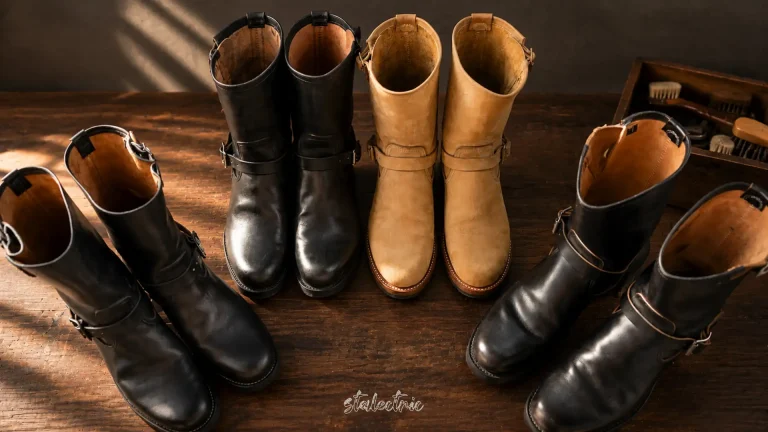
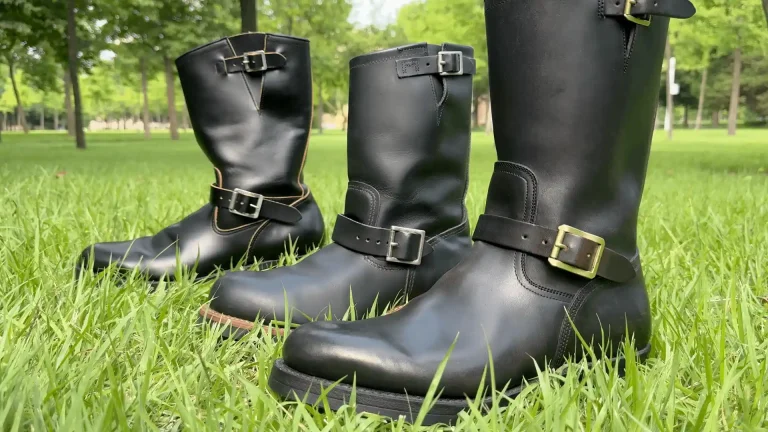
This roughout vs suede vs nubuck comparison isn’t about theory. For a long time, I thought I understood the difference between roughout, suede, and nubuck well enough to get by. On paper, it seemed manageable. One was tougher. One was softer. One split the difference somewhere in the middle. I could say those words with confidence, and for a while I believed them completely.
Then I started wearing these leathers hard enough, long enough, and in ordinary enough conditions that those neat categories stopped doing their job.
What unsettled me wasn’t some dramatic, single-day transformation. It was subtler than that. A roughout pair I expected to age in a predictable, rugged way started developing a surface rhythm I hadn’t anticipated. A suede pair I assumed would be delicate turned out to be less fragile in daily life than I’d imagined — but stranger in how it showed fatigue. And nubuck, which I thought I understood as the refined, controlled option, surprised me the most once real wear started stacking into weeks and months instead of isolated outings.
That early uncertainty is why this comparison kept nagging at me. I didn’t want to evaluate these leathers in theory. I wanted to understand what they actually become once they’ve been caught in light rain, brushed against concrete, flexed through long commutes, left near a dusty doorway, and handled over and over by the same pair of hands. Because that’s the part that changes your opinion. Not the first impression. Not the clean studio look. The repetition.
The First Mistake: Trusting Appearance Too Early
When all three are still fresh, roughout, suede, and nubuck almost invite you to judge them too quickly. Roughout looks open, fibrous, and practical. Suede looks soft, forgiving, and lifestyle-oriented. Nubuck comes off more disciplined — finer, more controlled at the surface. Those first readings aren’t exactly wrong. They’re just incomplete in the most misleading way possible.
Once real wear begins, the first thing that separates them isn’t toughness or durability. It’s how each leather records contact. That genuinely surprised me. I expected each to show wear differently, but I didn’t expect the method of recording to feel so distinct. Roughout tends to keep a broad, readable memory of movement — you see pressure, flex, and rub points as part of a larger texture story. Suede reacts more volatilely, where small shifts in nap direction can make a panel look either cleaner or more tired depending on the light. Nubuck can look perfectly calm at first, then a week later you notice the tone has shifted permanently in the exact areas you touch most. The shaft. The toe. The edge of the quarter. The places where your habits live. That’s a different kind of honesty.
Roughout: More Expressive Than Predictable
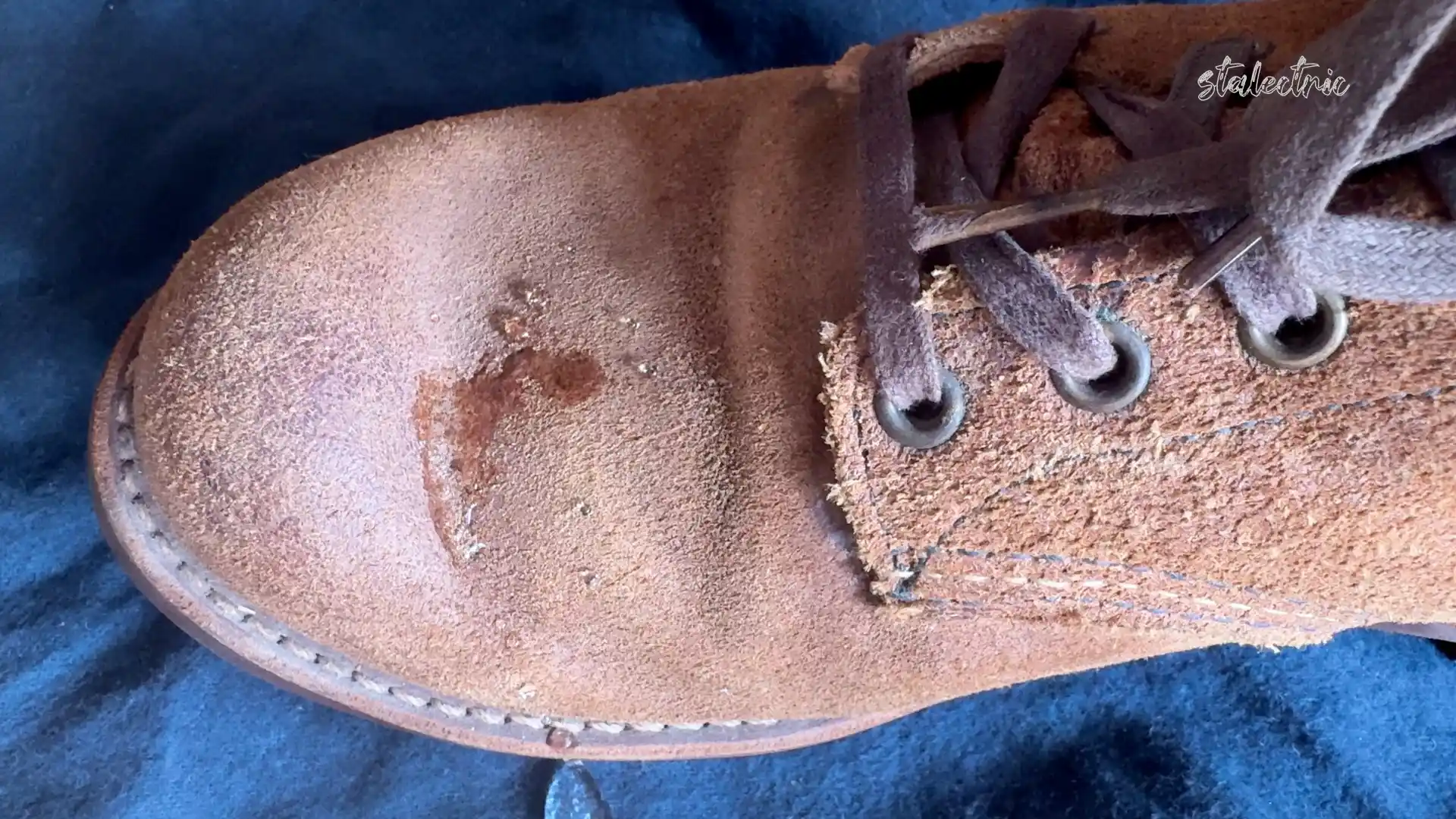
Roughout was the one I thought I had figured out from the start. Tough surface. Visible wear. Good recovery with brushing. End of story. But the more I wore roughout boots in real conditions, the more I realized predictability wasn’t quite the right word. Roughout is expressive. It can look rougher or more refined depending on how the fibers start laying down over time. In some light it looks almost dry and chalky. In other light it deepens and starts showing contrast that feels earned rather than applied.
What I had misunderstood was this: roughout doesn’t just absorb wear. It edits it. It decides what becomes part of the look and what gets softened into the background.
That became obvious after longer days, especially on mixed surfaces. A roughout boot after pavement, dust, and a few careless scuffs can look alive in a way smooth leather simply doesn’t. The nap shifts. Bright rub points appear. Flex zones build a recognizable pattern. But what surprised me was how often the boot recovered a kind of dignity after a simple brushing — not a reset back to new, but a reorganization. The chaos remains, but it reads more clearly. More intentionally, somehow.
That made me trust roughout more. But it also made me notice that its charm is conditional. It depends entirely on whether you enjoy visible history. If you don’t, roughout can feel restless rather than characterful. Its openness to wear isn’t a flaw in discipline — it’s actually the source of its conviction. Once I understood that, I stopped expecting it to look controlled and started appreciating what it was actually offering.
Suede: Moody in the Middle, Generous in the End
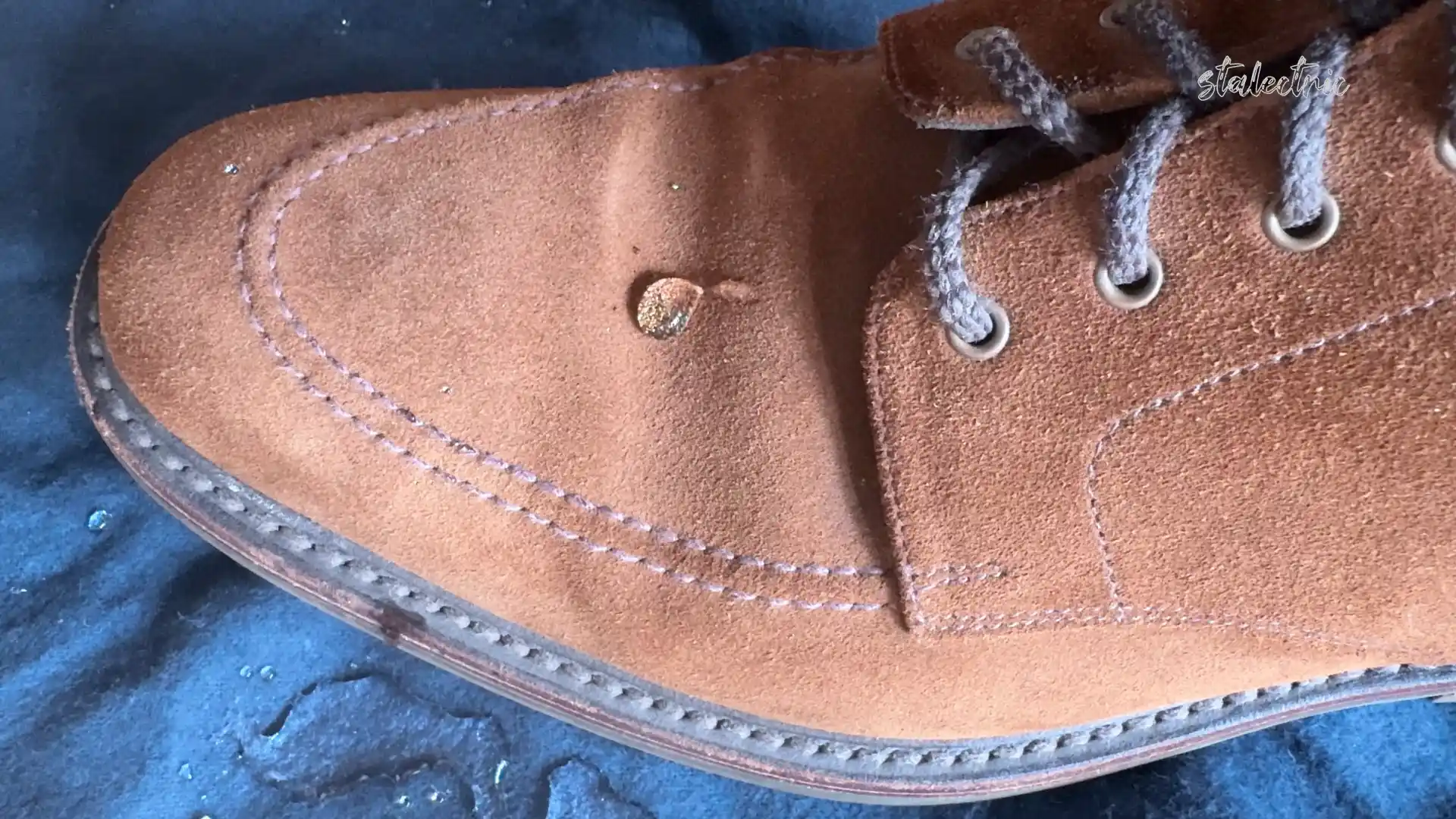
I had unconsciously filed suede into the category of something nice to look at and easy to baby — not something I’d want to actually live in. Real wear made that assumption feel shallow.
Suede can be more resilient in ordinary use than it gets credit for, but its emotional effect is genuinely different from roughout. When suede changes, it tends to look tired before it looks seasoned. Nobody warned me about the middle. There’s a stretch with suede — and you’ll know it when you hit it — where the surface has lost that initial evenness but hasn’t worn in long enough to look intentional. It catches light badly. Small patches read darker than the rest. It just looks off, and the temptation is to intervene. That phase is really just asking you a simple question: do you actually like this leather, or did you only like it new?
With roughout, the transition is easier to accept — the rougher surface almost welcomes disruption. With suede, a small flattening or a slight dark patch can feel more cosmetic, more like interruption than development. And yet, if you keep wearing it and stop demanding symmetry, suede can settle into something genuinely attractive. Less rugged than roughout, less tense than nubuck, but warmer somehow. More relaxed. More human.
The maintenance piece surprised me too. I went in expecting suede to be the needy one. Constant brushing, immediate punishment for any neglect, the kind of material that makes you feel guilty for living your life. That wasn’t really my experience. The problem, if anything, ran in the other direction — I was too quick to reach for the brush. Work it too hard chasing a uniform look and you’ve wasted the effort, because tomorrow’s wear undoes it. Leave it completely alone and it starts looking dull and compressed. Suede has a narrower window than I expected, and finding it took longer than I’d like to admit.
The trick, if there is one, is accepting that suede wants to remain slightly unstable. If you’re unsure where to start with brushing and basic upkeep, this video on cleaning roughout and suede breaks it down better than most written guides do. Once I stopped trying to make it look uniformly fresh and let it become itself, I finally understood it.
Nubuck: The One I Misread the Most

Nubuck was the leather that kept changing my opinion the longest, and the one I approached with the most initial confidence. I thought it would split the difference cleanly between roughout and suede — more refined than the former, more durable-looking than the latter, more controlled in how it aged. Real wear exposed something I hadn’t seen early enough: nubuck records pressure and handling in a way that feels subtle at first and irreversible later. It doesn’t always give you the courtesy of obvious warnings.
Roughout usually tells you early that it’s changing. Suede often signals it by looking uneven before it settles. Nubuck can make you think everything is under control, and then you look down one afternoon and realize the tone has shifted permanently in the exact zones where your habits live. That’s a different kind of honesty — quieter, and less forgiving.
That doesn’t make nubuck a worse leather. It makes it a specific one. It rewards a certain kind of owner more than I originally thought. If you appreciate a leather that begins with composure and then slowly reveals your habits in fine detail, nubuck is genuinely fascinating. But if you want something visually forgiving — something that shrugs off uneven contact and still looks broadly consistent week to week — nubuck can be more demanding than its clean initial appearance suggests.
I had misunderstood that completely. I thought refined meant manageable. Sometimes refined just means the changes arrive more quietly.
The Real Comparison: How They Age Emotionally
The biggest shift in my thinking came when I stopped comparing these three by toughness and started comparing them by how they age emotionally. That sounds abstract until you’ve spent enough time with all three. Roughout often feels collaborative. It takes wear, reflects it honestly, and gives some of that control back when you brush it and keep walking in it. Suede feels moody in the middle, then generous if you let it become what it wants to be. Nubuck feels composed until it doesn’t, and once it starts telling the truth, it tells it in a more permanent tone.
Texture is where these differences stop being theoretical. Roughout keeps a larger, more open texture story — even when worn in places, it tends to preserve a sense of fiber and movement. Suede can swing more dramatically depending on light and angle, sometimes looking rich and velvety, other times looking almost fatigued before bouncing back. Nubuck compresses the whole conversation. Its texture changes are finer, more tightly tied to oils, handling, and repeated contact — which means the same amount of wear can feel more visible on one nubuck panel than across a broader roughout surface, even if the boot overall still looks relatively neat.
Color aging also tricked me. I expected roughout to vary the most, suede to soften the most, and nubuck to stay the most coherent. Real wear complicated that immediately. Roughout often developed contrast sooner, but could also remain surprisingly readable if brushing and daily wear found a rhythm. Suede sometimes looked patchier early on, then mellowed into a softer consistency that wasn’t uniform but felt genuinely natural. Nubuck, especially in lighter tones, could show early darkening in high-contact zones that made the whole boot feel more changed than the surface suggested. I kept learning that coherence and uniformity are not the same thing.
Maintenance Is Negotiation, Not Preservation
I used to think the core maintenance question was simply which leather is easiest to care for. Now I think the better question is which leather responds in a way you personally enjoy participating in.
Roughout gives visible feedback quickly. Brush it and you see life come back almost immediately. Suede responds too, but not always in a satisfying before-and-after way — sometimes the improvement is subtle, and sometimes you have to leave it alone for a day and let it settle on its own. Nubuck can be the most psychologically difficult, because care can influence tone and texture without restoring the version you remember. That’s frustrating if you’re expecting control. It’s interesting if you’ve made your peace with management instead.
This is what I misunderstood about all three at the beginning: I thought maintenance was about preservation. In real wear, it’s about negotiation. You are not freezing leather in place. You are participating in the direction it takes. Some leathers make that participation feel obvious and rewarding. Others make it feel delayed and uncertain. But none of them stay neutral once you’ve worn them honestly.
What Roughout vs Suede vs Nubuck Actually Teaches You
Roughout, suede, and nubuck are not three versions of the same aging story with different levels of toughness. They are three different relationships with change.
Roughout is the most legible. It shows wear openly, ages with strong character, and usually gives you the most satisfying sense that a lived-in texture belongs there. Suede is the most misunderstood in the middle. It can look uncertain before it looks beautiful, but if you let it move through that awkward phase without trying to correct it, it develops a softness that feels natural rather than polished. Nubuck is the one I misread the most. It begins refined, but under real wear it becomes the most quietly irreversible — revealing your habits in ways that are subtle at first and undeniable later.
If I had understood that from the beginning, I would have chosen and worn each of them differently. I would have stopped expecting nubuck to stay composed for my convenience. I would have been more patient with suede before judging its uneven stage. And I would have appreciated sooner that roughout’s openness to wear isn’t a lack of discipline — it’s exactly why it ages with such conviction.
I no longer see roughout, suede, and nubuck as a spectrum from rugged to refined. I see them as three different ways leather tells the truth once time gets involved. And the one you end up loving most has less to do with theory than with which kind of truth you actually want to live with every day.
How Attractions Engineer Boots Develop Patina After 90 Days (Sand Nubuck)
Attractions 603LTD vs 329LTD Same Engineer DNA, Very Different Wear Reality