When I first got this pair of sand nubuck engineer boots, my reaction wasn’t excitement. It was hesitation.
They looked too clean. The color was pale, almost chalky, and the surface had that soft, velvety texture that makes every tiny mark stand out immediately. Compared to black leather or even teacore horsehide, there was no sense of built-in ruggedness. Nothing to hide behind. Just a very exposed, very unforgiving surface.
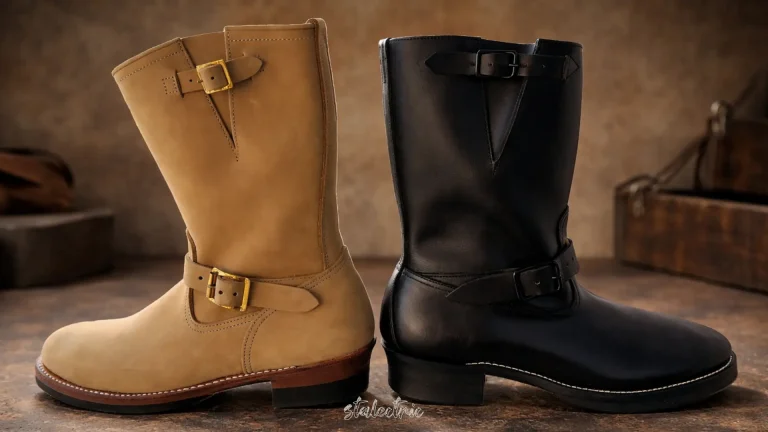
This particular pair is the Attractions biltbuck 329 limited edition engineer boot in sand nubuck. Their pattern leans slimmer and more structured compared to most traditional engineer boots, especially through the shaft and instep. It gives the boot a more refined shape, but in this kind of pale, open leather, that structure can feel almost too clean at first. It doesn’t look like something that belongs in daily wear, especially not in a city environment.
That feeling doesn’t last.
After about 90 days of regular use, the entire character of the boot starts to shift. Not suddenly, but in a way that becomes obvious once you step back and look at the whole picture.
The First Phase: High Contrast and Overreaction
In the first couple of weeks, everything feels like a mistake.
A small scuff on the vamp looks out of place. A bit of denim transfer on the shaft shows up immediately and doesn’t blend in. Even light dust can make the surface look uneven and patchy.
What’s really happening here is not damage, but contrast. The leather is still too uniform, too light, so any change appears exaggerated. You’re not seeing more wear than usual. You’re just seeing it more clearly.
This is also the stage where the instinct to “fix” things is strongest. Brushing, cleaning, trying to restore that original look. But the problem is, the leather hasn’t developed enough depth yet. You’re reacting to individual marks instead of allowing the surface to evolve as a whole.
If you leave it alone, things start to change.
The Second Phase: Shape Before Color
Somewhere between weeks three and eight, the visual focus shifts.
Instead of noticing every mark, you start noticing the structure of the boot. The ankle begins to form deeper rolls. The shaft stops standing perfectly straight and starts to follow the natural line of your leg. The leather softens just enough to move with you rather than against you.
This is also when the surface begins to change in more predictable ways.
The toe box, the heel counter, and the outer ankle start to look different from the rest of the boot. Not scratched, but smoother. Slightly darker. More reflective.
This is where burnishing starts to develop.
It’s not caused by harsh wear. It comes from repeated movement and pressure. The nap gets compressed, the fibers lay flatter, and the way light hits the surface changes. These areas begin to stand out, but in a more controlled and consistent way compared to the early stage.
At this point, the engineer boots stop looking new, but they still don’t look fully “broken in” either. They sit somewhere in between. This is also where engineer boots start to show their character, not just through color, but through how the shape settles over time.
The third phase: The Surface Starts to Make Sense
By the time you reach the 90-day mark, something shifts.
The early, scattered marks that once looked random begin to blend into the overall surface. Instead of isolated spots, you get a more unified appearance. The contrast softens, and the leather starts to look intentional.
The color changes as well.
What began as a pale sand tone warms up noticeably. In natural light, it can take on a honeyed or slightly tobacco-like hue. This isn’t the result of any product or treatment. It’s just the effect of wear, exposure, and time.
At the same time, the contrast between different areas becomes more structured.
The smoother zones around the toe and heel add depth.
The raised areas stay lighter.
The creases introduce shadow.
Together, these elements create a surface that feels layered rather than flat.
This is the point where the engineer boots stop looking “worn” and start looking “aged.”
What Actually Drives the Change
It’s easy to assume that this kind of transformation requires heavy use, but most of it comes from very ordinary conditions.
Walking creates consistent pressure and flex.
Denim introduces light, repeated friction, especially around the ankle.
Handling the boots transfers small amounts of oil from your hands.
None of these factors are extreme, but sand nubuck responds to all of them. Unlike heavily finished leather engineer boots, it doesn’t mask these inputs. It absorbs and reflects them over time.
That’s why the change feels more visible, even if the actual wear is not particularly aggressive.
Letting It Develop vs Trying to Control It
One of the biggest decisions early on is whether to intervene.
There’s a strong temptation to brush out marks, even out the surface, or apply products to maintain a cleaner look. That approach isn’t wrong, but it leads to a very different result.
In this case, I chose to leave the leather alone and let it develop naturally. No brushing, no conditioning, no attempts to reset the surface.
What becomes clear after a few months is that the leather does a better job of balancing itself than you can by constantly correcting it. The variation settles. The contrast evens out. The overall look becomes more cohesive.
It just takes time to get there.
Final Thoughts
Sand nubuck is not a forgiving leather at the start.
It highlights every mark. It makes you question your decision. And for the first few weeks, it rarely looks the way you expect.
But that early discomfort is part of the process.
After about 90 days, the same qualities that made it feel fragile begin to work in its favor. The leather develops depth, variation, and a sense of character that doesn’t rely on heavy finishing or artificial aging.
It doesn’t look perfect. It looks lived in.
And that’s exactly the point.
Alden 379x in Reverse Tobacco Chamois: The Ultimate Everyday Boot
Attractions 603LTD vs 329LTD Same Engineer DNA, Very Different Wear Reality